

We learn about love in childhood. Whether our homes are happy or troubled, our families functional or dysfunctional, it’s the original school of love.
— bell hooks, All About Love: New Visions (2000)
One of my earliest memories is playing alone in the front yard of our small red bungalow on Rex Avenue. My father worked full time for the government and sometimes travelled. Many weekends he spent helping my grandparents on their farm or going hunting. On weeknights, I remember him in the basement at his workbench, absorbed in the work of carving out more space as our family grew. He took his responsibilities seriously, and time to play felt scarce.
He had inherited a quiet, reserved nature from his own father. My grandfather was a farmer and a man of few words, though when anger surfaced, it could fill the room. My grandmother was the matriarch of the family, and looking back now, I can see she struggled with sudden and intense swings of emotion. My father grew up in that house. He carried what he learned there.
We were churchgoing people. Good people. But affection was not spoken. I was a shy, introverted child who did not care much for hunting or farm work. Inside, I was lonely. What I wanted most was my father’s attention, and I suspect he did not quite know how to give it, not because he didn’t care, but because no one had ever shown him how.
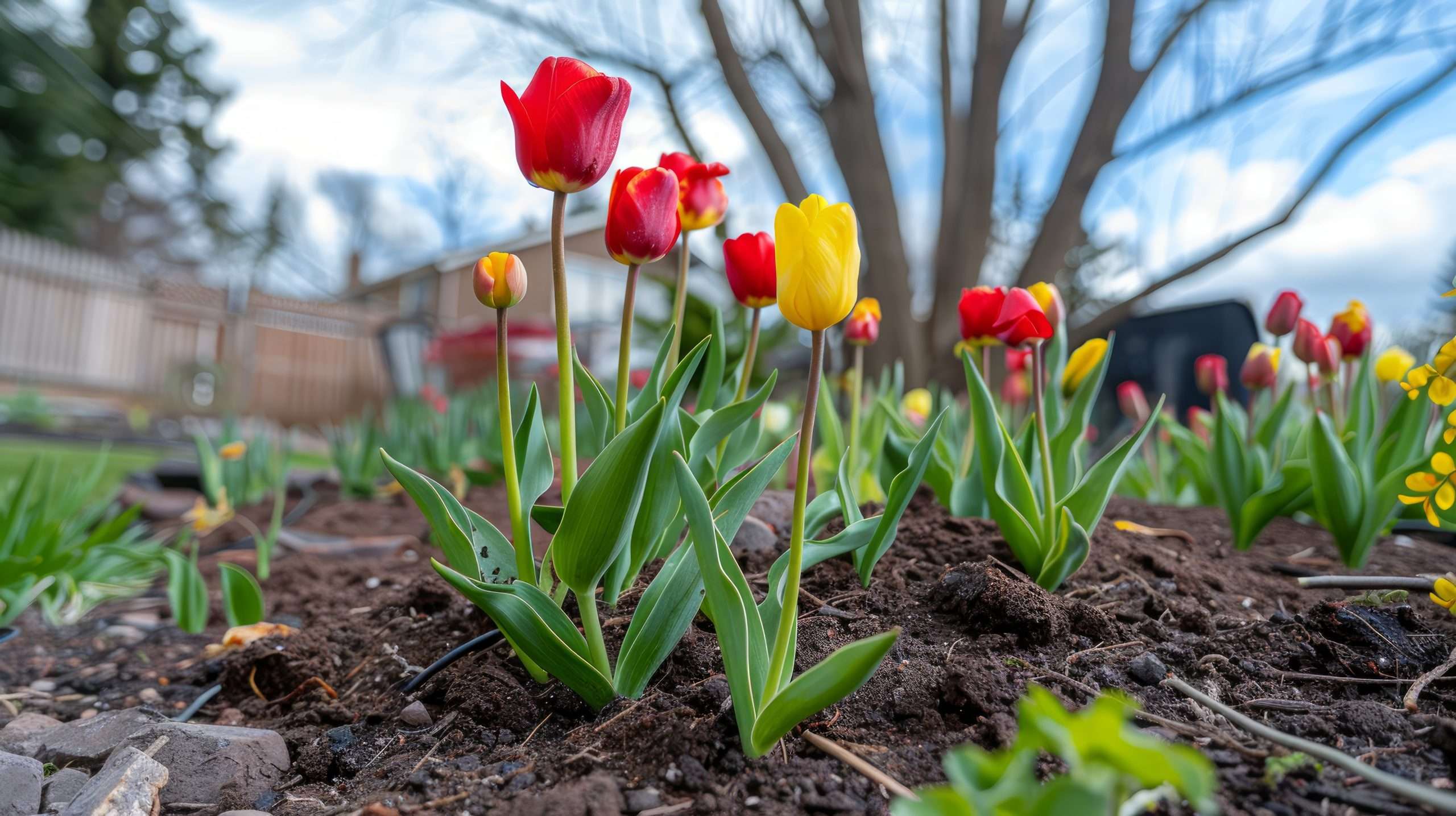
It was spring. The small garden near the front door was a sea of colour, the tulips in full bloom. I was very young when I decided that if he loved those flowers so much, perhaps I should pick some and bring them to him. I remember the certainty that this would be a good thing.
I carried the tulips up to the house and rang the bell. He came to the door. I held them up.
The smile I expected did not come. Instead, there was shock. His face turned red. I have never forgotten that face.
The tulips fell to the floor. Off came the belt.
I was left stunned and confused, with the sense that the flowers mattered more than I did. For years I carried anger toward my father, blaming him for far more than that single day. But beneath the anger was something more painful: a longing for acceptance.
Over time, I have come to see that my father did not fail me out of cruelty.He learned what love looked like in a house where anger and silence carried authority. He passed that lesson on, as these things are often passed on, without malice and without awareness.
This is what bell hooks writes about in the second chapter of All About Love. We absorb love’s shape from the adults around us. When punishment is labelled care, when silence passes for steadiness, when control is mistaken for concern, we take that in. As children, we do not have the luxury of discernment. We accept what is given and call it love because our survival depends on it.
John Bradshaw called this mystification: the way families teach children to doubt their own perception of what they are experiencing. hooks goes further. Most parents who cause harm were themselves raised without a clear map of love. The cycle is not a moral failing so much as an inheritance. My grandfather’s temper became my father’s. My father’s became mine.
Recovery gave me a place to begin looking at this honestly. The 4th Step asks us to take stock, and often what surfaces is grief, not just for what happened, but for what was called love and was not. Naming it does not undo the damage. But it changes our relationship to it. We stop treating ourselves as the problem and begin to understand that we were always worth more than what we received.
My father is older now. So am I. I have come to see that even though I once believed we were so different, we are in many ways so much alike. He is a good man. I love him, even though connection still comes awkwardly between us. And there is still time.
I have never felt entirely safe loving someone. Somewhere in me, love still carries the risk of sudden disappearance, the belief that I can never quite be enough. But perhaps love is not the belt, not the silence, not the shock on a reddened face. Perhaps love is the slow work of seeing clearly what we were given, and choosing, patiently, to give something different.
What did I learn about love in the home where I grew up, and am I still living by that lesson?
Who have I blamed for my wounds when what I really wanted was acceptance?
Where have I mistaken inheritance for identity?
What relationship in my life still has time to heal?