



“Those who are repetitively traumatized in childhood often learn to survive by over-using one or two of the 4F Reponses. Fixation in any one 4F response … impairs our ability to relax into an undefended state.”
— Pete Walker, Complex PTSD: From Surviving to Thriving (2013)
For years I mistook my survival patterns for my personality. The way I’d tense up when criticized, frantically reorganize when overwhelmed, or disappear when emotions ran high — I thought these were just “how I was.” It took time to recognize that anger, anxiety, shutting down, and people-pleasing weren’t quirks but the fight, flight, freeze, and fawn responses of a nervous system doing its best to protect me.
Walker describes these four defenses in detail. Fight reacts with control and anger to push back against helplessness. Flight races ahead into perfectionism, busyness, and anxiety to escape shame. Freeze withdraws, dissociates, and numbs to avoid danger. Fawn appeases, pleases, and abandons the self to keep others close. Each is a brilliant survival strategy for a child trapped in fear — but in adulthood, they keep us from resting in safety, intimacy, and authenticity.
Recovery invites me to see these reflexes not as flaws, but as defenses that can be softened through reparenting. This requires the kind of fearless self-examination found in Step 4, applied with compassion and without judgment. When fight emerges, I can offer: “You are safe now. You don’t have to fight anymore.” When flight takes over: “You do not have to be perfect to get my love and protection.” For freeze: “You are safe to feel and safe to be seen.” And for fawn: “I love who you are, not what you do for others.”
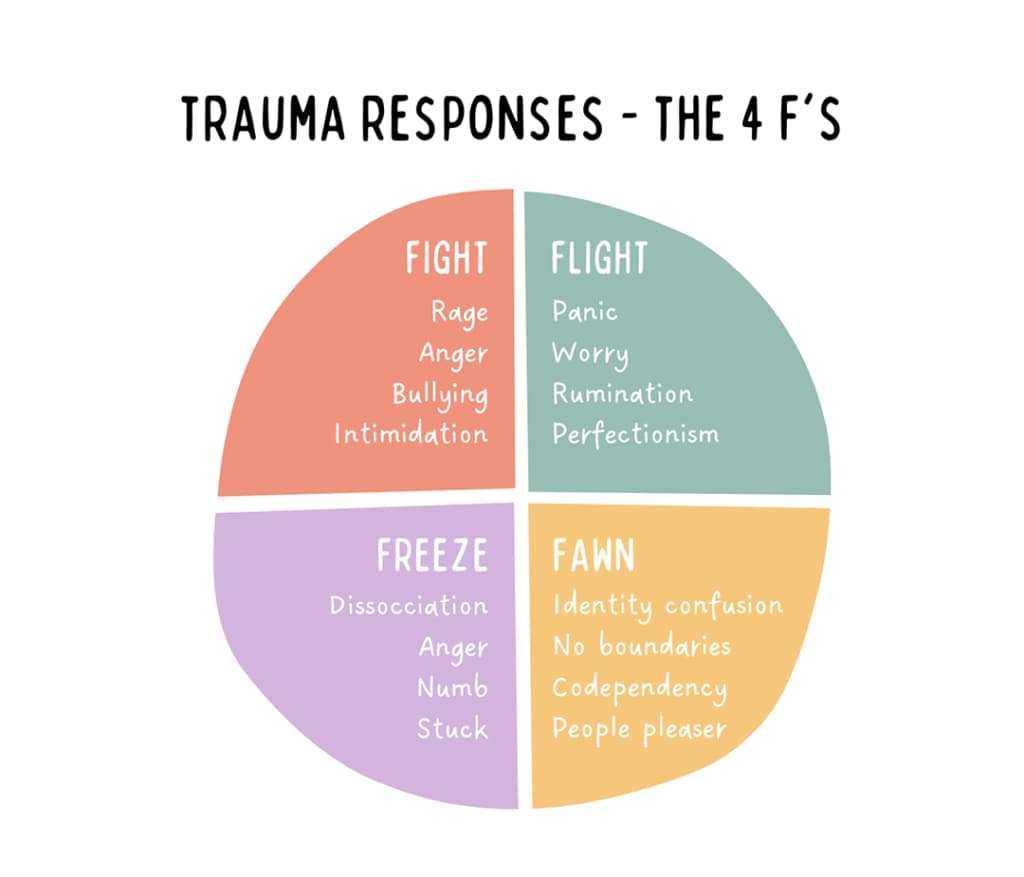
When I practice speaking to myself this way, I begin to unwind the grip of survival mode. Awakening is not about erasing fight, flight, freeze, or fawn, but about meeting them with compassion. Like the ongoing practice of recovery, this requires daily inventory — noticing when these patterns emerge without judgment, returning to the reparenting voice, and sharing this wisdom with others who are learning to distinguish between surviving and thriving. By pausing, noticing, and answering the child within me with kindness, I slowly move from surviving toward thriving.
Which of the four trauma responses—fight, flight, freeze, or fawn—shows up most often in my life right now?
What specific situations or relationships tend to trigger it?
When I notice this response emerging, what would it feel like to pause and offer myself the reparenting words that response needs?
How might my daily inventory practice help me recognize these patterns with compassion instead of criticism?