
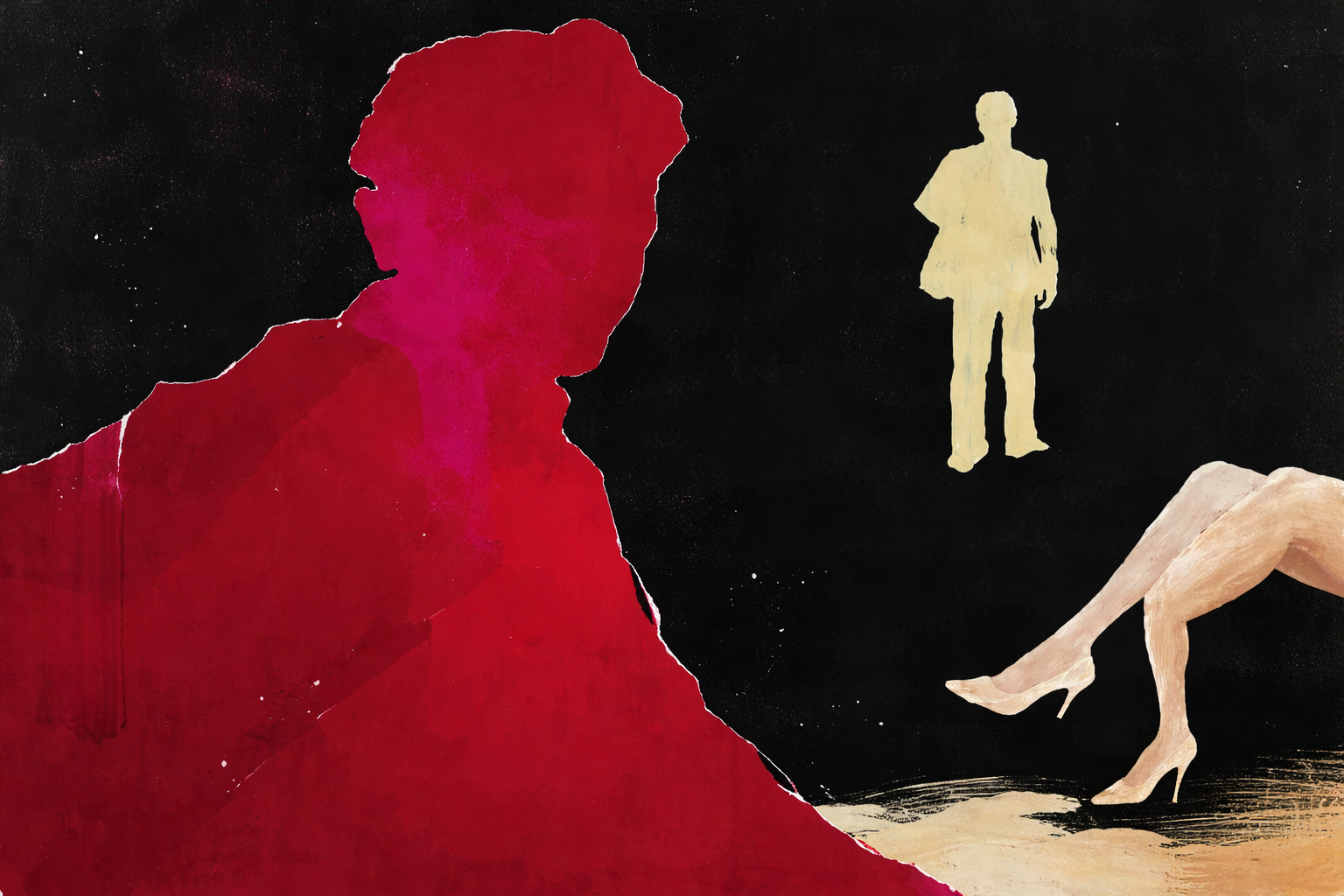


I was suddenly afraid. Perhaps it was because he looked so innocent lying there, with such perfect trust; perhaps it was because he was so much smaller than me; my own body suddenly seemed gross and crushing and the desire which was rising in me seemed monstrous. But, above all, I was suddenly afraid. It was borne in on me: But Joey is a boy, I saw suddenly the power in his thighs, in his arms, and in his loosely curled fists. The power and the promise and the mystery of that body made me suddenly afraid. That body suddenly seemed the black opening of a cavern in which I would be tortured till madness came, in which I would lose my manhood. Precisely, I wanted to know that mystery and feel that power and have that promise fulfilled through me. The sweat on my back grew cold. I was ashamed. The very bed, in its sweet disorder, testified to vileness. I wondered what Joey’s mother would say when she saw the sheets. Then I thought of my father, who had no one in the world but me, my mother having died when I was little. A cavern opened in my mind, black, full of rumour, suggestion, of half-heard, half-forgotten, half-understood stories, full of dirty words. I thought I saw my future in that cavern. I was afraid.
— James Baldwin, Giovanni’s Room (1956)
Published in 1956, Giovanni’s Room was one of the first major American novels to portray gay desire with honesty and without apology. The novel’s protagonist, David, cannot reconcile who he is with what he believes it means. This passage is a memory from his youth, a single night with his closest friend Joey, and the morning after, when everything that felt like tenderness is suddenly rewritten as evidence of something corrupt. He gets out of bed, showers, makes breakfast, and leaves. He will spend the rest of his life running from that moment.
This is internalized homophobia. The verdict David hears that morning was not formed in that moment. It was deposited long before, in the word queer used as an insult, in the quiet contempt or pity directed at people like him, in the silence that shut down any open mention of desire between men, and in stories where lives like his were mocked, punished, or left alone. By the time his desire surfaces, the meaning has already been assigned. He does not interpret the experience. He inherits the interpretation.
Matthew Todd’s Straight Jacket is a frank and searching examination of the psychological cost of growing up gay in a world that has not yet learned to make room for it. He describes internalized homophobia as shame accumulating the way stones accumulate in a pocket, each small moment adding weight until the load becomes so familiar it disappears from view. A boy who moves differently is corrected. A boy who loves the wrong things is redirected. A boy who feels the wrong feelings learns to bury them. None of it presents as damage. It arrives as the texture of ordinary life.
What makes this wound difficult to locate is where it attaches. Todd distinguishes between shame that guides behaviour and shame that attaches to being. When shame is tied to behaviour, there is a path forward. When it attaches to something that cannot be changed, there is no corrective action available. The logic shifts from I have done something wrong to I am wrong. That shift is the cavern. It turns inward and sustains itself, written in the first person, in a voice that feels like our own. The movement continues anyway.
I can see how much of my own life has been shaped by that movement. The ways I have approached intimacy, the intensity I have sought, the disruptions I have created all carry the imprint of something I absorbed before I could question it. It did not feel like a pattern rooted in shame. It felt like instinct. That is how internalized homophobia works. It does not feel imposed. It feels inherent.
Recovery has not removed the cavern. It has made it visible. I am beginning to understand where it came from, how it formed, and what I built around it to survive. That understanding creates the possibility of change. The verdict can be examined. The stones can be set down. The cavern remains, but it no longer defines the entire landscape.
What did I learn to believe about my desire before I understood it?
Where do I still treat my nature as something to control or hide?
How do I continue to move toward and away from intimacy in response to that belief?
What might change if I no longer accept that belief as true?