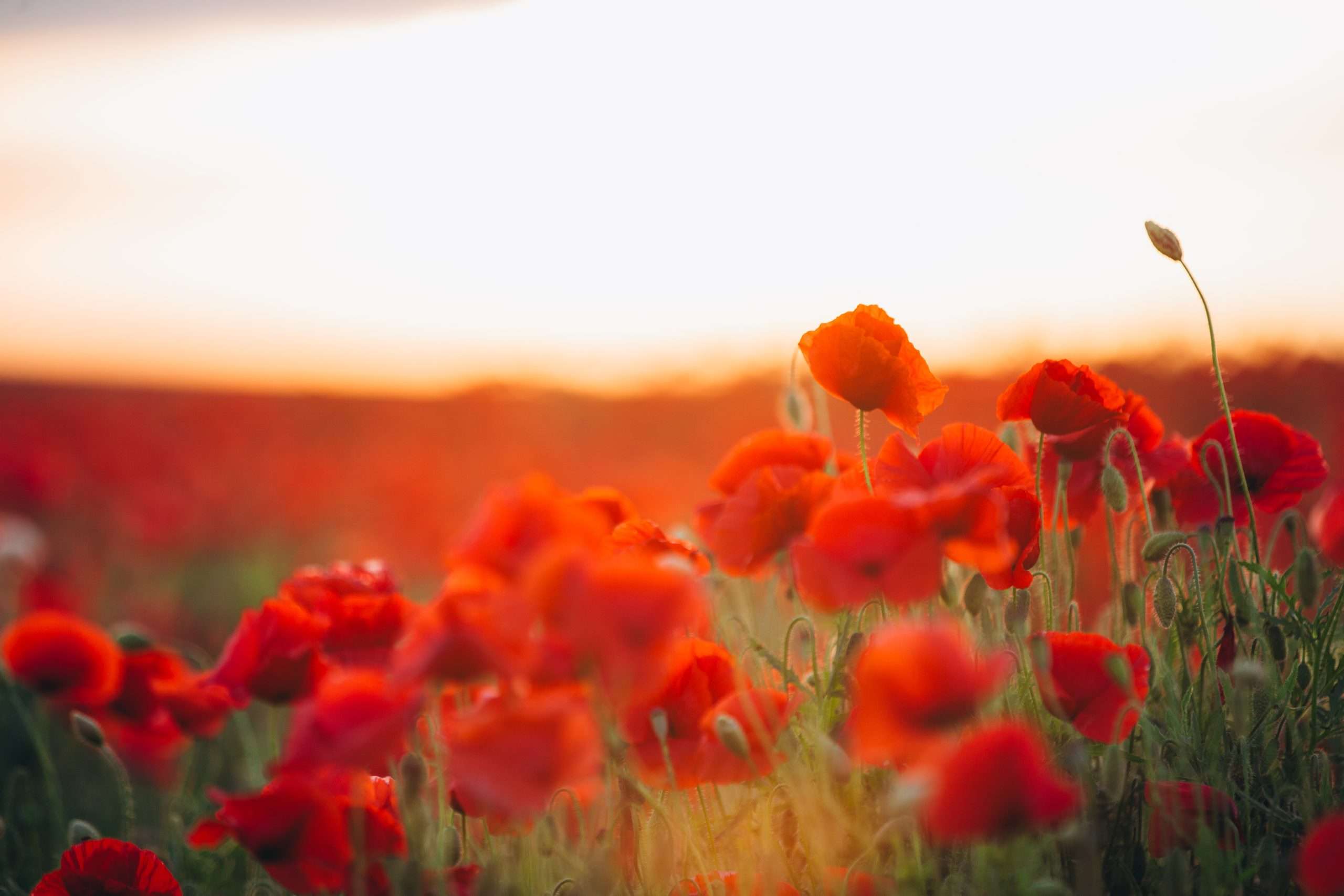


In Flanders fields the poppies blow
Between the crosses, row on row,
That mark our place; and in the sky
The larks, still bravely singing, fly
Scarce heard amid the guns below.We are the Dead. Short days ago
We lived, felt dawn, saw sunset glow,
Loved and were loved, and now we lie
In Flanders fields.Take up our quarrel with the foe:
To you from failing hands we throw
The torch; be yours to hold it high.
If ye break faith with us who die
We shall not sleep, though poppies grow
In Flanders fields.— Lieutenant-Colonel John McCrae, “In Flanders Fields” (1915)
Today we pause to remember those who served and sacrificed so others could live in freedom. Lieutenant-Colonel John McCrae, a Canadian military surgeon, wrote these words in 1915 after burying his friend Alexis Helmer on a battlefield in Belgium. He saw poppies growing between the makeshift graves and understood something about how the living must honor the dead—not just through memory, but through action.
“To you from failing hands we throw the torch; be yours to hold it high.” It doesn’t stay lit on its own. It must be carried, tended, passed forward. Those who came before us—in war, in recovery, in any struggle for freedom—offer us something precious. But the offer requires a response. We need to reach out and take hold of it. We keep it burning.
In recovery, I think about the people who didn’t make it. Friends who relapsed and never came back. Those who carried the message to me when I was lost, then disappeared before they could see me get well. The old-timers who showed me how to stay sober, who have since died. I carry their torch now, whether I’m ready or not. That’s the nature of being alive when others aren’t—you inherit a responsibility you never asked for.
This is what service means to me. Just the simple, daily act of holding the torch high so someone else can see it in the dark. Going to meetings. Answering the phone. Sending that text. Showing up when I don’t feel like it. Staying sober one more day. Passing on what was freely given to me. I can never fully repay the people who saved my life. But I can honor them by doing for others what they did for me.
McCrae’s poem reminds me that freedom—whether from war or addiction—is never permanent. It requires vigilance. It requires maintenance. The Twelfth Step speaks of a “spiritual awakening” that must be kept alive through action and service. The Big Book tells us we have “a daily reprieve contingent on the maintenance of our spiritual condition.” These are promises, but also warnings. If I break faith with those who gave me recovery, if I stop doing the work, the flame goes out.
Remembrance Day asks: How do we honor sacrifice? Recovery asks the same question. Both are answered the same way—not with grand gestures, but with daily practice. With showing up. With remembering that what we have was paid for by others and must be carried forward. The torch is in my hands now. It’s my turn to carry it forward.
What torch has been passed to me, and am I keeping it burning?
How do I remember those who were lost by the way I live today?
What does it mean to maintain my freedom through daily practice and service?
Who is watching for the light I carry in the dark?