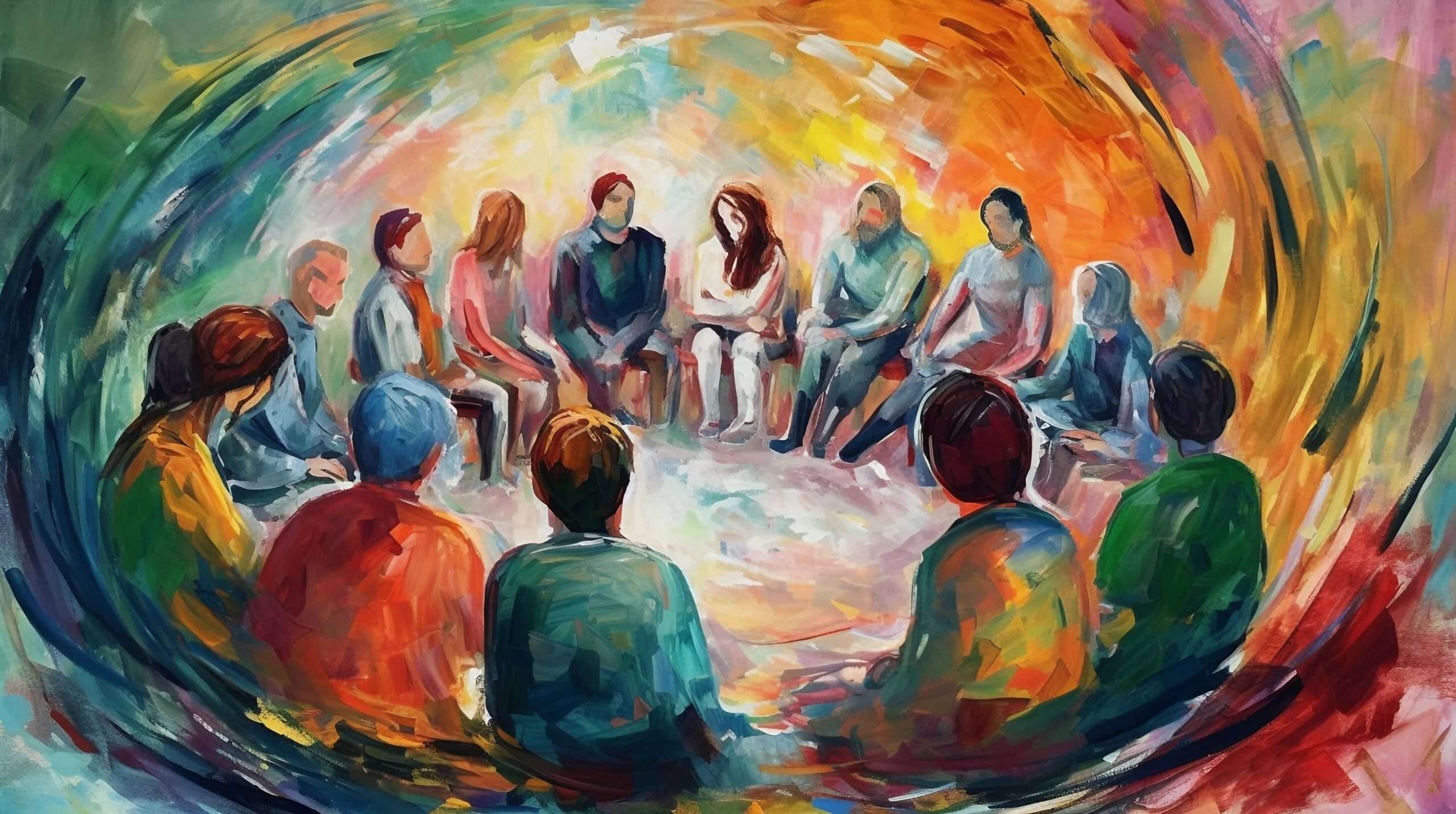



Boundaries are the distance at which I can love you and myself at the same time.
— Nedra Glover Tawwab, Set Boundaries, Find Peace (2021)
We think of boundaries as barriers—walls we build to keep people out. But Nedra Glover Tawwab, a therapist and relationship expert, reframes them entirely. A boundary is not where love ends. It is where love becomes possible. Without it, we collapse into others or push them away completely. With it, we can finally stand close enough to connect without losing ourselves in the process.
Many of us learned early that love meant shrinking. We watched someone disappear to keep the peace, and we took notes. We abandoned our needs to preserve connection, or we abandoned connection to preserve our needs. Either way, something essential was lost. When we entered recovery, we brought these patterns with us. We over-gave until resentment poisoned the giving. We stayed silent until silence became its own betrayal. We mistook accommodation for love, and fear for kindness.
Tawwab identifies six areas where boundaries live. Physical boundaries govern who has access to our body and personal space—how close someone can stand, whether touch is welcome, what feels safe. Sexual boundaries address consent, comfort, and how intimacy is discussed and navigated. Intellectual boundaries protect our right to hold our own thoughts, opinions, and beliefs without being dismissed or ridiculed. Emotional boundaries determine how much of another person’s feelings we carry, and how much of our own inner world we share. Material boundaries involve our possessions, our money, and what we lend or give. Time boundaries define how we spend our hours and who gets to make demands on them. These six areas are the actual territories of daily life. When we feel drained, resentful, or invisible, the issue often lives in one of these spaces.
The hardest part, Tawwab writes, is accepting that some people won’t like, understand, or agree with our boundaries. For those of us who learned to read the room before we read ourselves, this feels like risk. Setting a limit can seem like lighting a fuse. But clarity is not confrontation. Saying what we need is not an attack. It is an invitation. It gives others a chance to meet us where we actually are, not where we’ve been pretending to be.
Resentment is the signal we most often ignore. It whispers that a boundary has been crossed or was never set. But resentment doesn’t appear from nowhere. It grows in the gap between what we felt and what we said. When we inventory our resentments, we often find that the real issue wasn’t what someone did to us. It was what we allowed, what we never named, what we swallowed and called love.
Our program teaches us to tell the truth, but it doesn’t always teach us how to tell the truth in relationship. This is the gift of learning boundaries. We stop expecting others to read our minds and start offering them something real. We stop disappearing to keep others comfortable and start showing up as ourselves, present and boundaried, finally close enough to love without losing who we are.
Where is resentment signaling a boundary I haven’t set?
What am I calling love that might actually be self-abandonment?
Which of the six boundary areas—physical, emotional, intellectual, sexual, material, or time—needs the most attention in my life right now?
What is one clear, kind limit I could communicate today?