
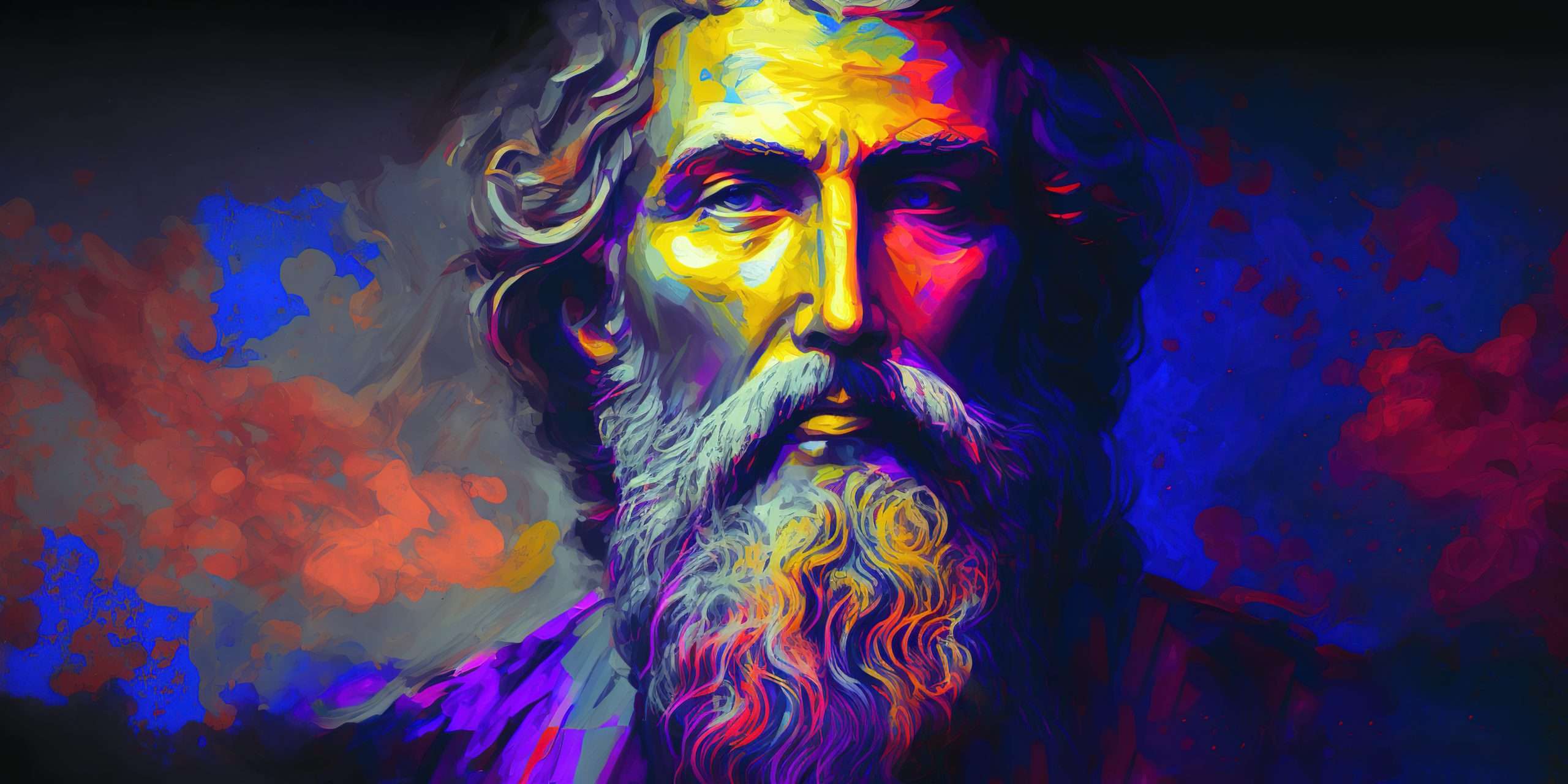


“You must be ready to burn yourself in your own flame; how could you rise anew if you have not first become ashes? That fire which we kindle in ourselves consumes our own darkness, our own remnants of the past. In this burning lies the path to renewal, for only through destruction does creation come. So long as you are not reborn in your own fire, you will remain but shadow and smoke.”
— Friedrich Nietzsche, Thus Spoke Zarathustra (1883–85)
Friedrich Nietzsche was a German philosopher whose work broke from religion and tradition to search for a living spirituality rooted in self-transformation. In Thus Spoke Zarathustra, he imagined a prophet teaching humanity how to awaken to its own creative power—a poetic call to courage, honesty, and rebirth.
This passage comes from “The Way of the Creator.” To create anything real, one must first allow the old to burn away. The “flame” is the fire of consciousness—the fierce willingness to face one’s illusions, guilt, and fear without retreating. To “become ashes” means to surrender every false identity until only truth remains. What rises from that fire is transformation.
At the heart of Nietzsche’s vision is the idea of the Übermensch—literally, the “Over-Man.” It isn’t a superior person who rules others, but one who transcends their former self. The Übermensch is born from the ashes of who we once were: free from borrowed beliefs, alive with self-authored purpose.
Unlike traditional 12-step philosophy, which teaches surrender to a power greater than ourselves, Nietzsche rejected the idea of submission to any external authority—including God. He believed that true transformation comes not from surrendering our will, but from exercising it with unflinching honesty and courage. For Nietzsche, the “higher power” is not something outside us to which we yield, but our awakened self—the person we are becoming through self-overcoming. This path may resonate with those in recovery who struggle with the concept of an external higher power, offering instead a vision of self-authored transformation.
The fire, then, is the heat of willingness—the courage to face ourselves without illusion. It’s the burning honesty that consumes denial, the alchemy of pain that turns suffering into strength. To walk into that fire is to choose self-creation over self-destruction. Each confrontation with old patterns, each moment in the blaze of truth, remakes us—smaller in ego, greater in authenticity.
Am I willing to let my old identities burn so that something truer can emerge?
Can I see the fire of discomfort as the forge of transformation rather than its enemy?
What strengths within me are waiting to be awakened?
And when the fire has done its work, who will rise from the ashes?