


Because of our kinship in suffering, and because our common means of deliverance are effective for ourselves only when constantly carried to others, our channels of contact have always been charged with the language of the heart.
— Bill W., “The Language of the Heart,” AA Grapevine, July 1960
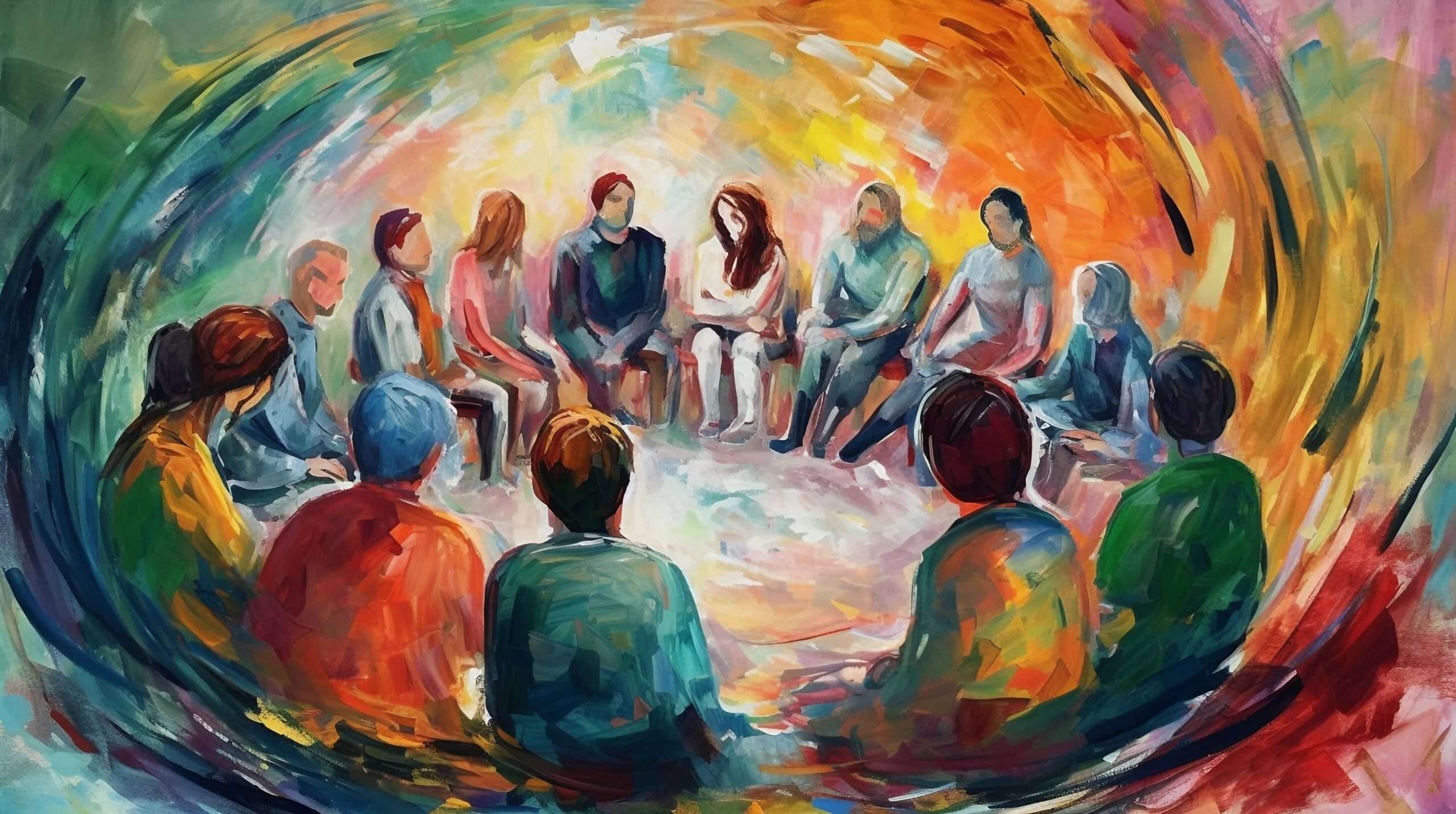
Last night I sat in a room packed with people who came to celebrate a friend’s thirty-five years of recovery. Our normally spacious meeting space was so full that members sat on the floor. As she often says, it wasn’t a celebration about her—it was a celebration of the program that saved us, and brought us all together.
There were laughs, and there were tears. There were moments that gave me goosebumps—and times where I made eye contact knowingly with the person beside me because the speaker’s words landed in a place we both recognized. But one phrase stayed with me: “I didn’t get better on my own First Step; I got better on someone else’s Twelfth Step.”
That’s the language we speak. It’s the invisible current that moves between people who share a common suffering and a common solution. When I first came in, I didn’t understand it. I heard the clichés—One Day at a Time, Keep Coming Back, You Are Not Alone—and they sounded worn out, almost childish. But the power of a cliché in a meeting isn’t in the phrase. It’s in the lives of the people saying it. These aren’t philosophical statements. They’re survival instructions, what you grab onto when you’re drowning. Over time I saw that these sayings get repeated because they work. They hold up under pressure. They’re what remains after everything else collapses.
We all come through those doors broken and alone—lost, frightened, and without purpose. We sit down and hear others share words we don’t yet understand. We nod politely, or stare blankly, or fight tears we don’t want to feel. And somehow, even in that confusion, something begins to hold us. We stumble, but we’re carried. We lean on borrowed hope until we discover a little of our own.
And then, one day—not always suddenly, but unmistakably—we find our voice again. We join the chorus of those who speak this language, the language of the heart. It’s communicated not only through words, but through concrete actions, new attitudes, and the small movements of people who show up for each other. It’s a way of connecting that lets us recognize ourselves in one another, long before we know how to put our own stories into words.
Last night’s celebration wasn’t just about thirty-five years. It was about the miracle of sitting in a crowded room knowing that none of us has to walk this path alone. We are part of something larger, steadier, and more loving than anything we could have built on our own. We have found a new way of living.
Where have I borrowed hope, honesty, or courage from someone else’s recovery?
How can I offer that same gift to someone who still needs it?
What would it mean to speak today in the language of the heart?
Who in my life needs to know they’re not alone?