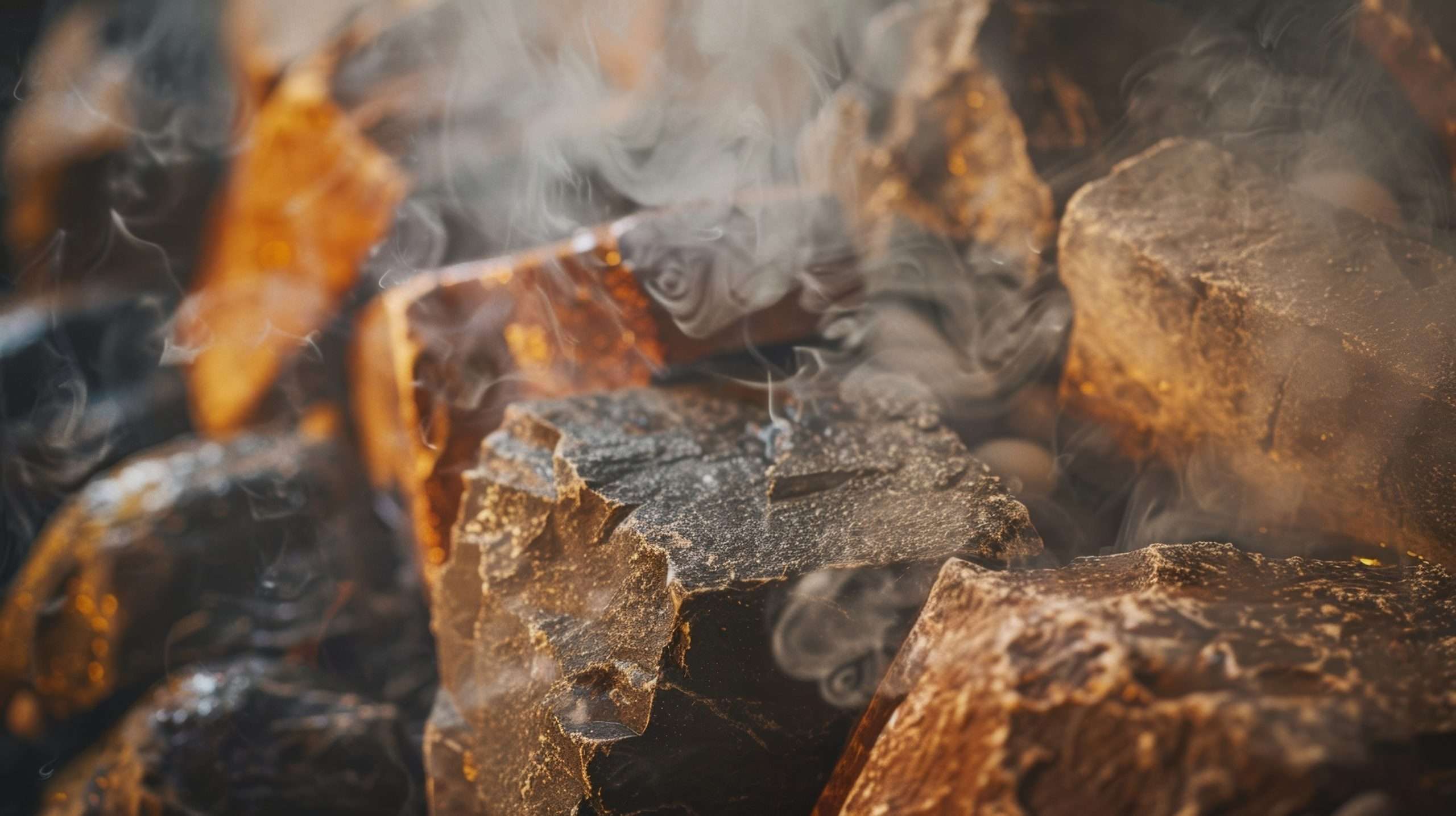


They construct a house of wood and place stones in one corner. Beneath the stones they kindle a fire until the stones are intensely hot. Then they pour water upon the stones, producing a steam that fills the house. Each man has a bundle of green branches with which he strikes his body, causing sweat to pour from him. By this means they cleanse themselves, and when they come out, their bodies are free of filth.
— Ahmad ibn Fadlan, Risāla (c. 921-922 CE)
I went to Koena last night—a Nordic spa in Gatineau—and followed the circuit: hot pools, cold plunges, saunas. One of the offerings is Aufguss, meaning infusion in German. Large balls of scented ice are dropped onto burning stones. As they melt, steam rises. The Aufgussmeister uses a fan to drive the heat through the room in waves. Four rounds. Fourteen minutes.
The first wave hit my face and chest, immediate and unmistakable. My breathing changed—shorter, shallower. The second round brought sweat in earnest. It ran down my back, pooled behind my knees, dripped from my forearms. The oils opened my sinuses. The third round pushed past what felt tolerable. My skin and lungs burned. By the fourth, every part of me wanted to stand up and leave. I stayed.
Here’s what had happened. My heart rate climbed. Blood vessels dilated. Pores opened wide. Sweat poured from everywhere. Water left my body—one to two litres—along with sodium, potassium, metabolic waste, lactic acid. Blood flow to my skin increased dramatically.
I felt like a snake shedding its skin. A snake doesn’t decide to shed. Its body simply outgrows what once fit. The old layer becomes tight and opaque. Vision dulls. Movement stiffens. The snake finds rough surfaces—rocks, branches—and rubs until the dead skin splits and peels away. What emerges isn’t a new snake. It’s the same one, no longer trapped inside what it outgrew.
This ritual is ancient. Ahmad ibn Fadlan witnessed the Rus—Norse traders and settlers—performing it more than a thousand years ago. They struck their bodies with green branches hard enough to leave marks. They understood something about force and release, about friction being necessary to loosen what clings.
In the Nordic world, the sauna was not leisure. It was a threshold. These structures were often built at the edges of settlements—spaces between the ordinary and the sacred. Women gave birth there. The dying spent their final days there. Bodies were washed and prepared for burial. Steam was understood as the breath of earth and ancestors. Warriors cleansed themselves before battle, seeking favour from Odin.
When I finally stood to leave, dizzy and depleted, my skin felt raw. Not transformed. Not cured. Just clean enough to continue.
Where in my recovery am I being asked to stay with the heat instead of escaping it?
What old skin am I still clinging to even though it no longer fits?
What does my body already know that my mind keeps arguing with?
What might “clean enough to continue” look like today, rather than perfect or finished?