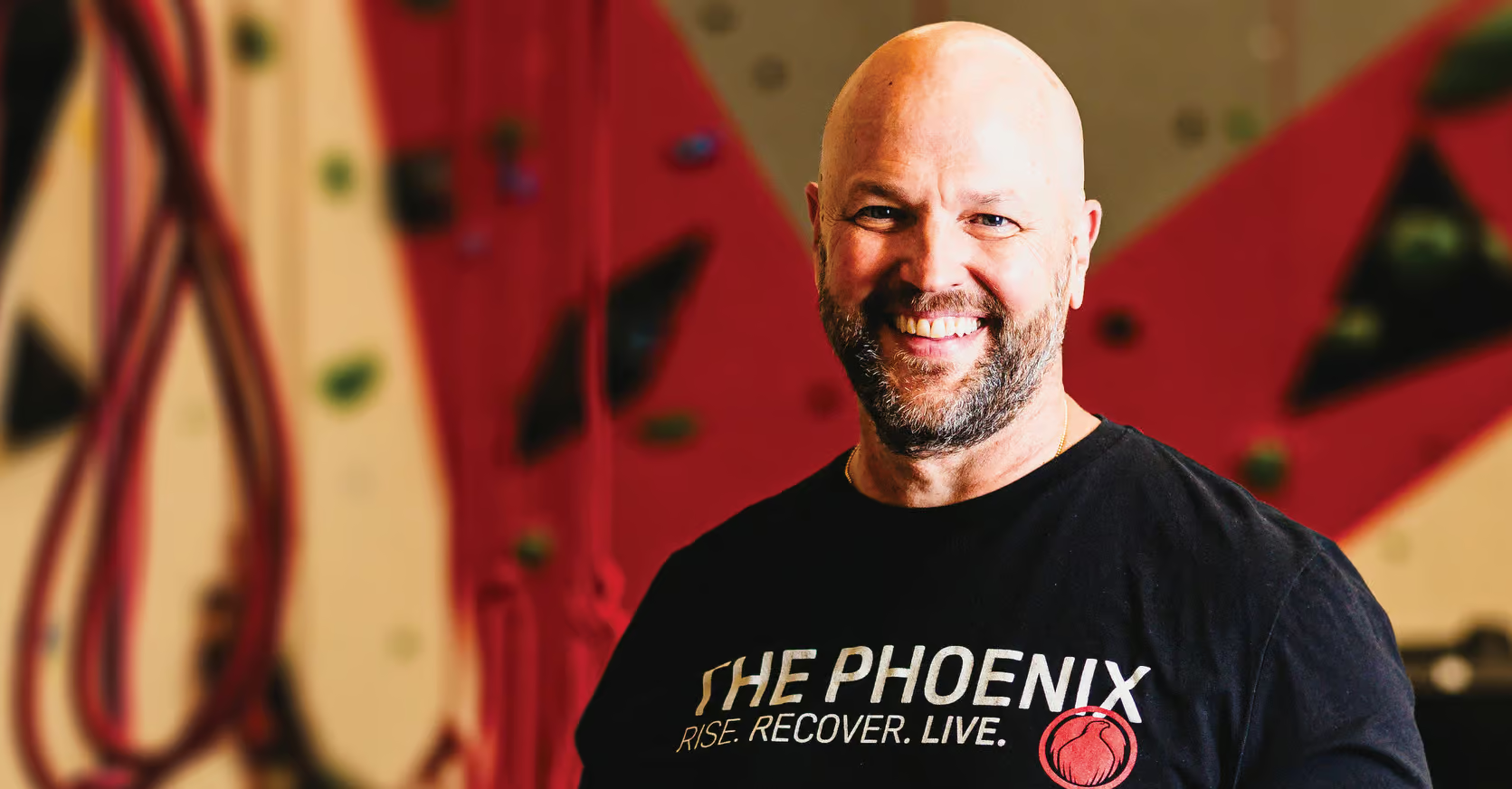


“Who among us doesn’t want to rise? Live longer, better, happier? I firmly believe each of us has the ability to do that. Every day I see people who are struggling to survive in Boston’s open drug market near where I now work and live. I see the potential in every single one of them. They just don’t yet see the potential in themselves.”
— Scott Strode, Rise. Recover. Thrive. (2024)
Scott Strode’s journey begins in the shadows: a young man alone in an alley, too drunk to light a crack pipe. Through climbing, boxing, and endurance sport, he replaced the weight of addiction with the rhythm of ascent. Every summit and finish line became a statement of identity: a little more a climber, a little less an addict. Out of that transformation, The Phoenix was born — a sober active community where fitness becomes fellowship and every workout is an act of recovery.
The Phoenix doesn’t start with what’s broken. It begins with what’s possible. Its only cost of admission is forty-eight hours of sobriety and a willingness to lift others up. Across the U.S., thousands of people gather in CrossFit gyms, yoga studios, hiking trails, and boxing rings, proving that recovery can be an act of motion, not isolation.
The Phoenix embodies a powerful truth: recovery is one big tent. It doesn’t belong to any single program, philosophy, or path. Some people find healing in the 12 Steps, some in treatment, therapy, or harm reduction. Others find it in mindfulness, art, or service. What unites us is the movement from disconnection to connection — with ourselves, with others, and with life. The Phoenix stands as living proof that there are many doors into the same home.
At its heart, The Phoenix teaches that lasting sobriety requires positive coping mechanisms and a peer group that supports recovery. Where addiction isolates, movement and community reconnect. Instead of escaping feelings, we move through them — together. Each lift, each climb, each shared breath becomes a healthy outlet for emotion, a practice of regulation, and a reminder that healing isn’t done alone.
In my local community in Ottawa, Canada, we see that same fire burning through Unbroken Recovery — a peer-led community where movement and recovery merge. Their offerings, from CrossFit and boxing to yoga and outdoor hikes, remind us that healing doesn’t happen in stillness alone. Like The Phoenix, they show that strength isn’t just physical; it’s relational. Every push-up, every match, every honest conversation is a vote for life.
In the end, communities like The Phoenix and Unbroken Recovery aren’t just organizations — they’re an idea. That we rise through each other. That the body can teach the spirit to hope again. And that every time we lace up our shoes, open our hearts, or reach a hand across the circle, we remember: we were never meant to do this alone.
How does movement — physical or emotional — help me rediscover my own strength?
Where in my recovery do I still define myself by my past rather than my potential?
Who helps me rise when I stumble, and how can I return that gift?
If recovery is one big tent, what path am I helping to hold open for others?